IN THIS ARTICLE
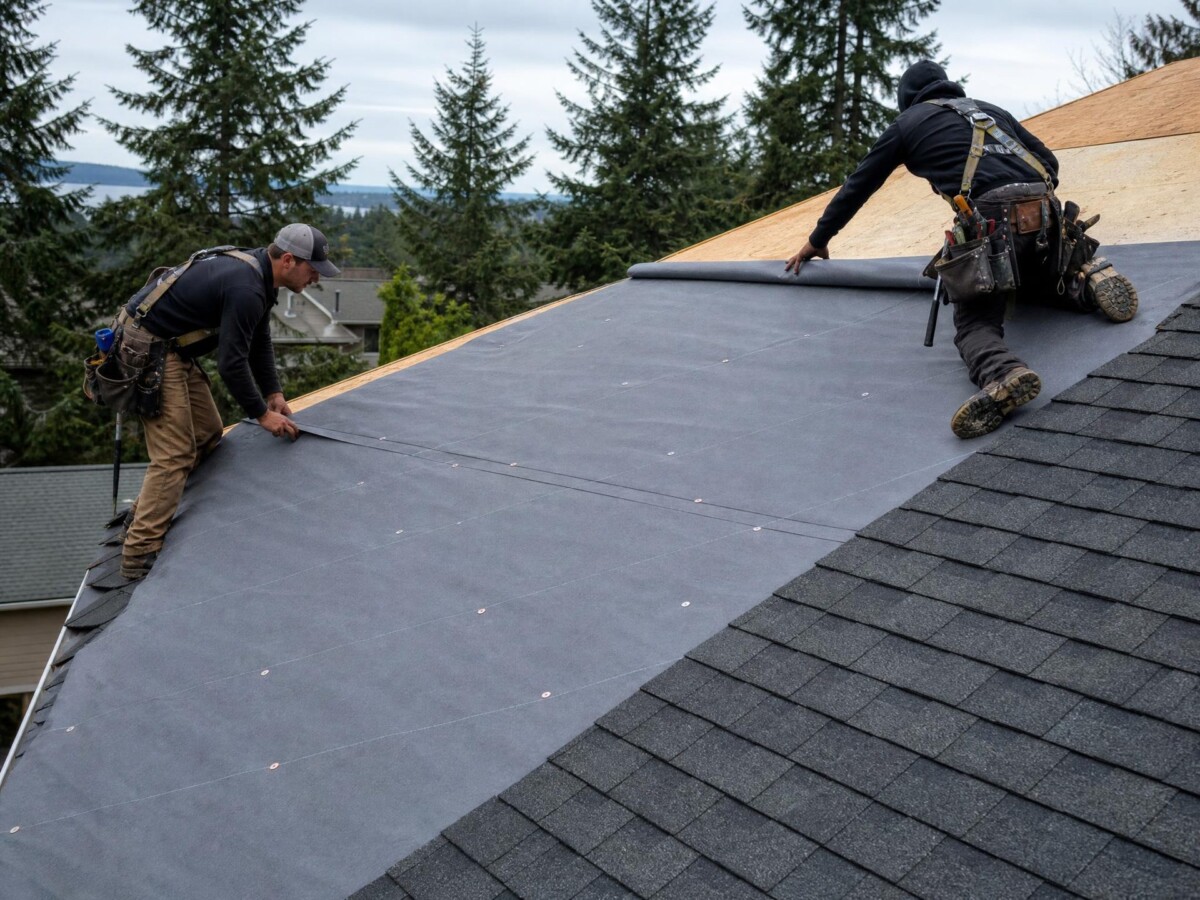
There are three types of roof underlayment: asphalt-saturated felt (#15 and #30), synthetic, and self-adhering peel-and-stick membrane. Synthetic has become the standard on quality installs — it costs $0.10 to $0.25 per square foot against felt’s $0.05 to $0.10, but it is far stronger, lays flatter, and tolerates exposure during the build. Peel-and-stick is the premium waterproofing layer used at vulnerable spots. On a Pacific Northwest roof, the right answer is usually a combination. Here is the breakdown.
The three types compared
| Type | Cost / sq ft (material) | Strengths | Weaknesses |
|---|---|---|---|
| #15 / #30 felt | $0.05 to $0.10 | Cheap, familiar, code-minimum | Tears, wrinkles when damp, degrades fast if exposed |
| Synthetic | $0.10 to $0.25 | Tear-resistant, lightweight, walkable, weeks of UV exposure tolerance | Costs more; quality varies by brand |
| Peel-and-stick membrane | $0.50 to $1.00 | Waterproof (not just water-shedding), self-seals around nails | Priciest; bonds to deck — used at key zones, not the whole field |
What underlayment actually does
Shingles shed most of the water; underlayment catches what gets past them — wind-driven rain, water backing up at edges, and anything that sneaks under a lifted tab. It is also the roof’s only protection during the install window between tear-off and shingles. In our climate, where a “dry window” can close in an hour, the tougher and more exposure-tolerant the underlayment, the safer the job.
What we spec on Pacific Northwest roofs
The combination that earns its cost here: synthetic underlayment across the field, plus ice and water shield membrane at eaves, valleys, and penetrations. Felt still passes code on paper, but on a roof that will live under fir needles and nine months of rain, the upgrade from felt to synthetic costs a few hundred dollars on a typical home — and the membrane at the vulnerable zones is what actually prevents the leaks we get called for.

Underlayment and your roof pitch
Pitch changes the rules: on slopes between 2:12 and 4:12, code requires either a double layer of underlayment or a self-adhering membrane under asphalt shingles, because water drains slowly enough to migrate sideways. Below 2:12, shingles are out entirely. The full spec is in our minimum roof pitch guide.
FAQ
Is synthetic underlayment worth it over felt?
Yes on almost every install. The upgrade costs a few hundred dollars on a typical home, and synthetic resists tearing, lays flat, and survives exposure if weather interrupts the job — which in the Pacific Northwest it regularly does. Felt’s only advantage is price.
Is #15 or #30 felt better?
#30 is the heavier, more tear-resistant version and the better choice of the two — but on most quality installs today the real question is felt vs. synthetic, and synthetic wins the durability comparison at a modest premium.
Can underlayment be the only roof covering temporarily?
Briefly. Felt degrades within days of UV and rain exposure; quality synthetics are rated for weeks to months of exposure. That rating is exactly what protects your home if a reroof gets interrupted by weather.
Does underlayment type affect the shingle warranty?
It can. Manufacturer system warranties often specify approved underlayments as part of the assembly. Using the specified components — underlayment included — is part of what keeps enhanced warranties valid.
How long does roof underlayment last?
As long as the roof above it, when covered: 20 to 30 years under asphalt shingles. It is replaced at every reroof — reusing old underlayment is a shortcut that voids most warranties.
The layers under your shingles matter most
The Roofing Titan installs and repairs roofs across Kenmore, Kent, and Greater Seattle with the edge, flashing, and underlayment details built for Pacific Northwest weather. Request a free inspection with a photo report and get a straight answer on what your roof actually needs.
Family-owned, GAF-certified roofers based in Kenmore, WA. We install, repair and clean roofs across the Eastside and North King County, and we write about what we find on them. Book a free inspection →